

Cecilia by Simon and Garfunkel - Easy Ukulele Chords
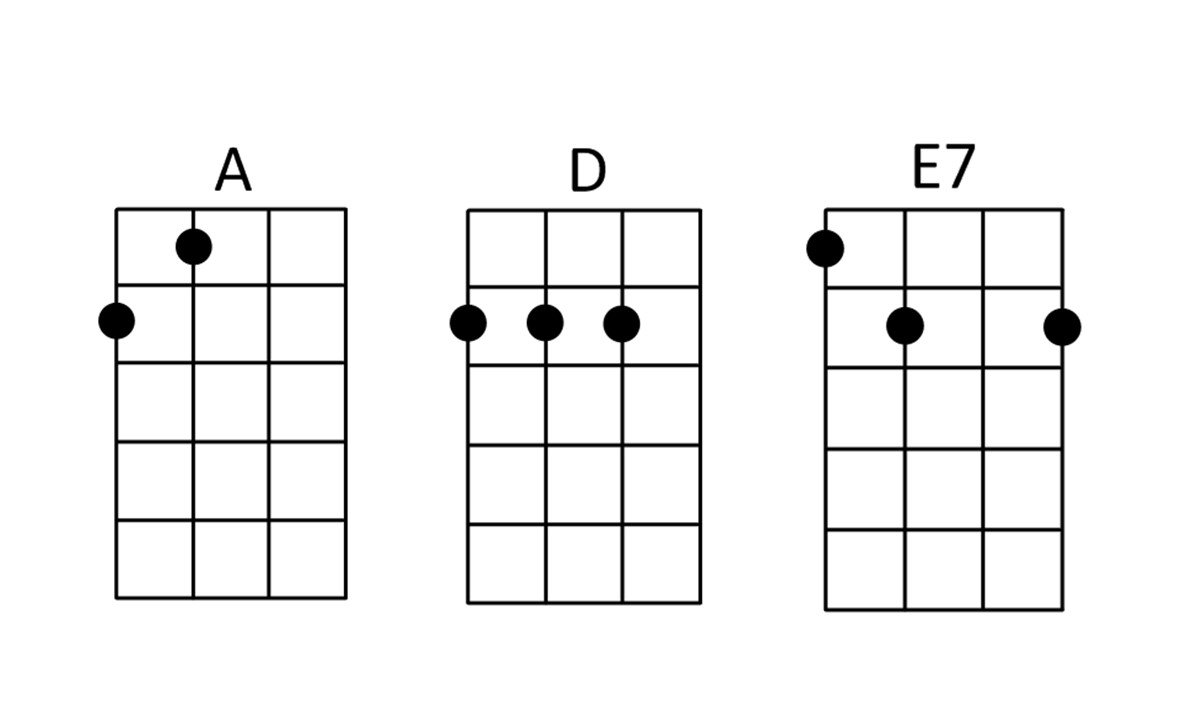
Chorus
[A]‘Cilia, you're [D]breaking my [A]heart,
You're [D]shaking my [A]confidence [E7]daily,
Whoa Ce-[D]ci – [A]lia, I'm [D]down on my [A]knees,
I'm [D]begging you [A]please to come [E7]home.
[A]‘Cilia, you're [D]breaking my [A]heart,
You're [D]shaking my [A]confidence [E7]daily,
Whoa Ce-[D]ci – [A]lia, I'm [D]down on my [A]knees,
I'm [D]begging you [A]please to come [E7]home,
Ho-ho- [A]home.
Verse 1
[A]Making love in the [D]after- [A]noon,
With Ce- [A]cilia, [D]up in [E7]my bed- [A]room,
(Makin’ [A]love) I got up to [D]wash my [A]face,
When I [A]come back to bed someone's [E7]taken my [A]place.
Chorus
[A]‘Cilia, you're [D]breaking my [A]heart,
You're [D]shaking my [A]confidence [E7]daily,
Whoa Ce-[D]ci – [A]lia, I'm [D]down on my [A]knees,
I'm [D]begging you [A]please to come [E7]home,
Come on [A]home.
Whistling solo (same chords as verse)
A A D A
D A E7 E7
D A D A
D A E7 E7
Verse 2
Jubi- [D]la – [A]tion, she [Dl]oves me a- [A]gain,
I [D]fall on the [A]floor and I'm [E7]laughing,
Jubi- [D]la – [A]tion, she [D]loves me a- [A]gain,
I [D]fall on the [A]floor and I'm [E7]laughing.
Outro
Whoa oh [D]ohh – [A]oh, oh [D]oh oh oh [A]oh,
Oh [D]oh oh oh [A]oh, oh oh [E7]oh oh-oh,
Whoa oh [D]ohh – [A]oh, oh [D]oh oh oh [A]oh,
Oh [D]oh oh oh [A]oh oh oh [E7]oh oh-oh …
(Fade out or finish on A - single strum)
➡️ Download a PDF of ‘Cecilia’
➡️ Get Your Free Ukulele Chord Charts
The Story Behind the Song
The real story behind Cecilia is a lot less mysterious—and a bit more playful—than the lyrics might suggest.
The song came together during the recording sessions for the album Bridge Over Troubled Water (released in 1970). One night, Paul Simon and Art Garfunkel were experimenting with rhythm in a casual, almost improvised way. They started banging on a piano bench and recording the sound, creating that distinctive, bouncing percussion you hear throughout the track. The groove came first—lyrics followed later.
As for “Cecilia” herself, she isn’t based on a specific real person. Paul Simon has suggested that the name may symbolically reference Saint Cecilia, who is traditionally associated with music.
So the backstory is less about drama and more about spontaneity: a late-night rhythm experiment that turned into one of the duo’s most energetic and enduring songs.