

Auld Lang Syne (Traditional) - Easy Chords for Ukulele
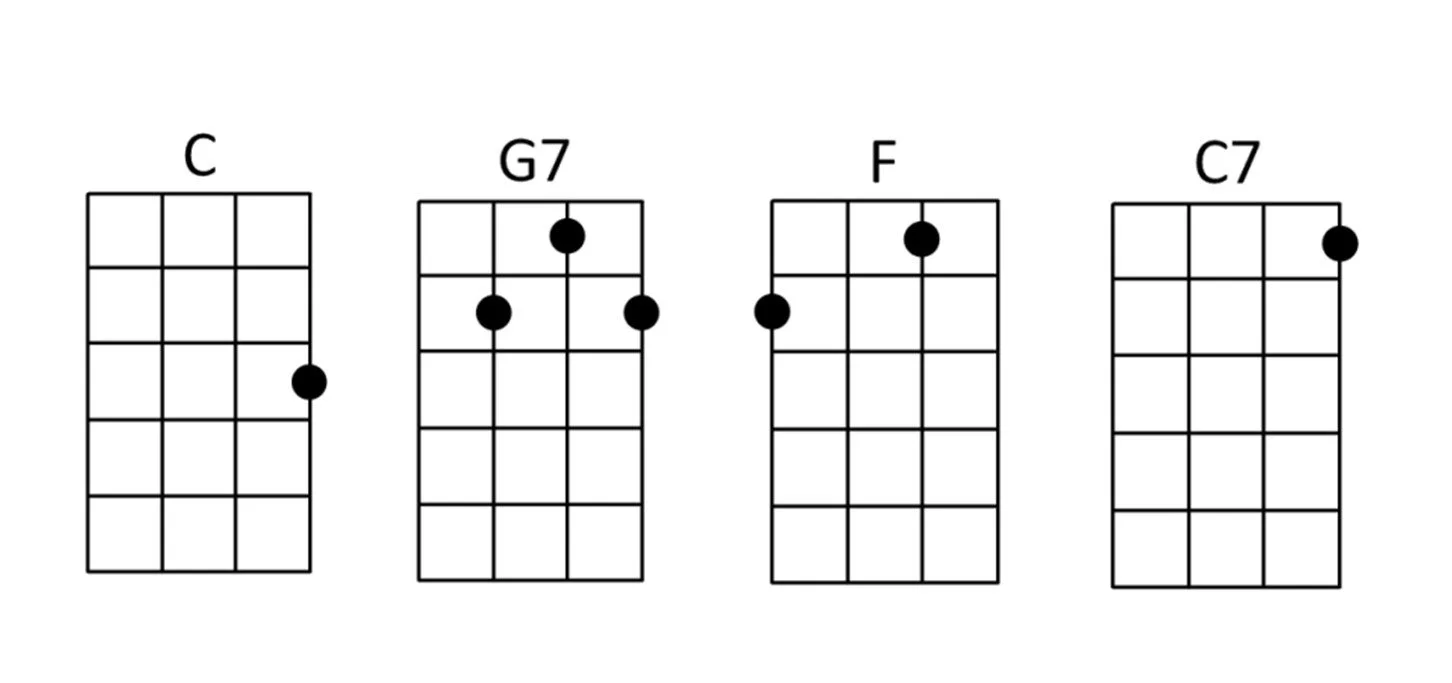
Verse
Should [C]auld acquaintance [G7]be forgot and
[C]never brought to [F]mind?
Should [C]auld acquaintance [G7]be forgot and
[F]days of [G7]auld lang [C]syne
Chorus
[G7]For [C]auld lang [G7]syne, my dear,
For [C]auld [C7]lang [F]syne
We’ll [C]take a cup of [G7]kindness yet,
For the [F]sake of auld [G7]lang [C]syne.
➡️ Download a PDF of ‘Auld Lang Syne’
➡️ Get Your Free Ukulele Chord Charts
The Story Behind the Song
"Auld Lang Syne" is traditionally sung at New Year's Eve celebrations around the world.
The words were collected and adapted in 1788 by the Scottish poet Robert Burns, who said he had heard the verses from an old folk song. The title comes from the Scots language and roughly means "old long since" or, more naturally, "times gone by."
The song is about friendship, memory, and remembering people and experiences from the past. Its famous opening question "Should old acquaintance be forgot?" asks whether we should forget old friends and shared experiences. The answer implied by the song is "no"; we should cherish those memories and relationships.
The melody most people know today comes from a traditional Scottish tune rather than one written by Burns himself.
During the 19th and 20th centuries, the song became associated with Hogmanay (Scottish New Year celebrations). From Scotland, the tradition spread internationally, and it is now sung at midnight on New Year's Eve in many countries as people say goodbye to the old year and welcome the new one.
Its enduring appeal comes from its universal message: as we move forward, we should remember the people, friendships, and moments that have shaped our lives. That blend of nostalgia, gratitude, and hope for the future has made Auld Lang Syne one of the world's most recognizable songs.